
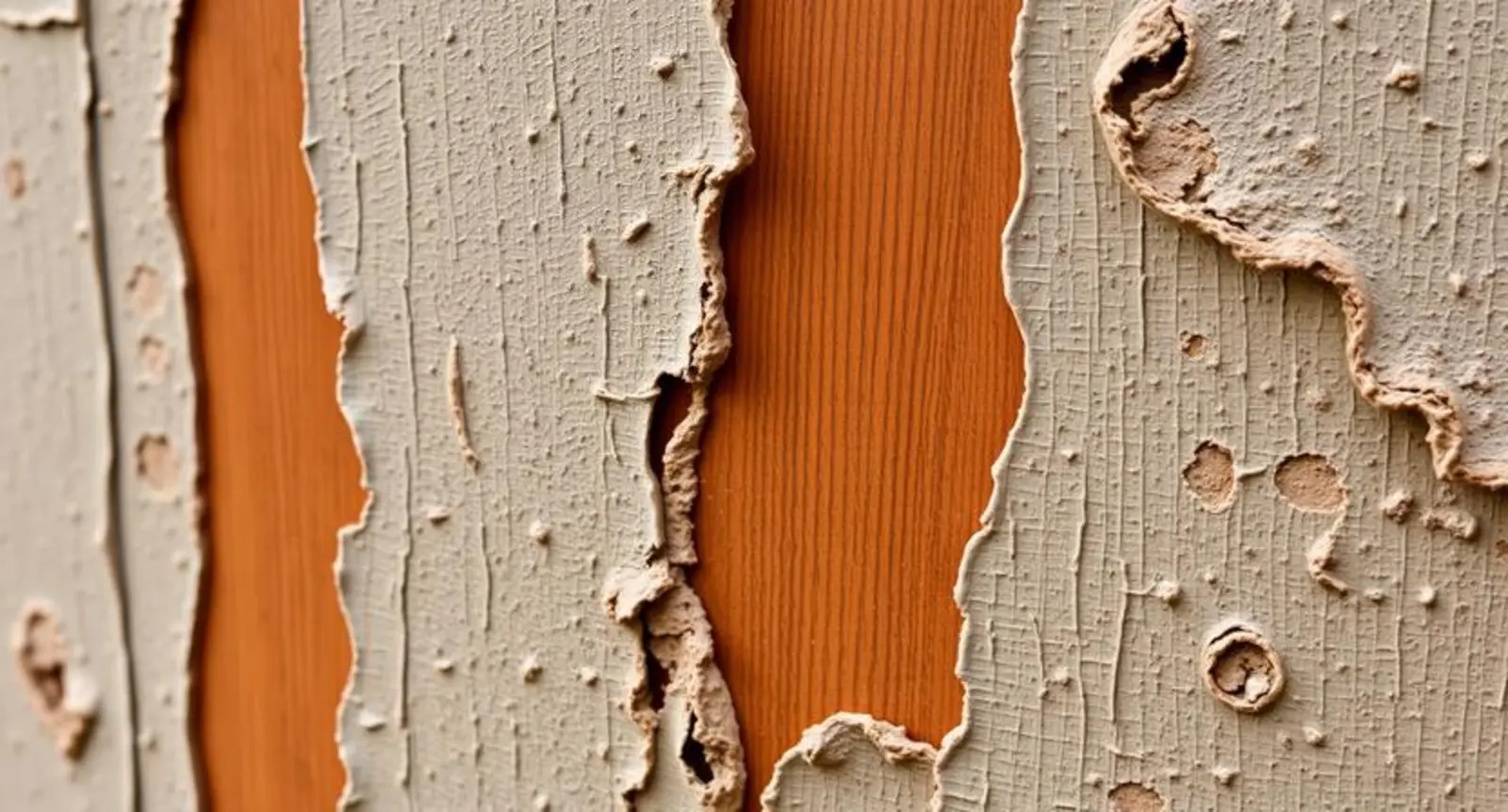
If you’re looking for an imperfections synonym, the best choice depends on what kind of imperfection you mean. Flaws is a natural everyday alternative, while defects often suggests a functional or structural problem.
Shortcomings focuses on limitations, blemishes works well for appearance, and faults can describe personal or general weaknesses. In creative or positive contexts, words such as quirks, idiosyncrasies, or eccentricities can describe imperfections without sounding harsh.
Quick Answer: Best Synonyms for Imperfections
| Synonym | Best meaning/context | Tone | Formality |
| Flaws | General weaknesses or defects | Neutral | Medium |
| Defects | Structural or functional problems | Negative | Medium–High |
| Faults | Mistakes, weaknesses, or defects | Neutral–Negative | Medium |
| Shortcomings | Areas where something is lacking | Mildly negative | Medium |
| Blemishes | Small visible imperfections | Mildly negative | Medium |
| Deficiencies | Lack of something necessary | Negative | High |
| Weaknesses | Areas of reduced strength | Neutral–Negative | Medium |
| Limitations | Boundaries or restrictions | Neutral | High |
| Errors | Incorrect actions, results, or details | Negative | Medium |
| Inadequacies | Failure to meet an expected standard | Negative | High |
| Discrepancies | Differences or inconsistencies | Neutral–Negative | High |
| Quirks | Unusual characteristics, often endearing | Positive/Neutral | Informal |
| Idiosyncrasies | Distinctive personal peculiarities | Neutral | High |
| Foibles | Minor personal weaknesses | Light/Mild | Medium |
| Defects | Serious physical or technical faults | Negative | High |
Best all-purpose synonym: flaws
Best professional synonym: shortcomings or limitations
Best for physical appearance: blemishes
Best for technical problems: defects
Best for gentle personal description: quirks or foibles
What Does “Imperfections” Mean?
Imperfections are qualities, features, mistakes, or conditions that fall short of an ideal, expected standard, or desired state.
The word can refer to something physical:
The artist deliberately preserved the imperfections in the handmade pottery.
It can also describe a person’s character:
Everyone has imperfections, but they do not define a person’s worth.
Or it can refer to a product, system, process, design, or piece of writing:
The editor identified several imperfections in the original manuscript.
The important point is that imperfection is a broad concept. Not every synonym has exactly the same meaning.
Imperfections Synonym: The Meaning Spectrum
One of the easiest ways to choose the right synonym is to place alternatives on a spectrum from neutral limitation to serious defect.
Limitation → Shortcoming → Flaw → Fault → Defect → Deficiency → Inadequacy
These words overlap, but they are not interchangeable in every sentence.
1. Limitation
A limitation is something that restricts effectiveness, ability, scope, or performance.
Example:
The software has some limitations when processing large files.
This is often the least judgmental option.
2. Shortcoming
A shortcoming is an area in which someone or something fails to reach an expected standard.
Example:
One shortcoming of the proposal is its lack of supporting evidence.
It is particularly useful in reviews, evaluations, and professional writing.
3. Flaw
A flaw is a weakness, defect, or imperfection that reduces quality.
Example:
The argument has a serious flaw.
“Flaw” is one of the most versatile synonyms for imperfection.
4. Fault
A fault can mean a defect, mistake, or weakness.
Example:
The machine stopped because of an electrical fault.
It can also describe someone’s character:
Impatience was one of his faults.
5. Defect
A defect usually indicates a more concrete problem, particularly in manufacturing, engineering, technology, or physical objects.
Example:
The inspection revealed a manufacturing defect.
Calling a personality trait a “defect” can sound unusually harsh.
6. Deficiency
A deficiency means that something is insufficient or lacking.
Example:
The report revealed deficiencies in the company’s safety procedures.
This word is especially common in technical, medical, academic, and professional contexts.
7. Inadequacy
An inadequacy suggests that something does not meet the required standard.
Example:
The investigation exposed inadequacies in the existing system.
It is formal and often carries stronger criticism than “limitation.”
Imperfections Synonyms by Context
The best synonym changes according to what is imperfect.
For Physical Imperfections
When describing appearance, surfaces, objects, or materials, these words are useful:
- Blemishes
- Flaws
- Marks
- Spots
- Defects
- Irregularities
- Inconsistencies
- Discolorations
- Scars
- Deformities
Examples
The fabric contains a few minor blemishes.
The jeweler removed several surface flaws.
Natural stone often contains unique irregularities.
Blemish is usually softer than defect. A blemish may affect appearance without affecting function.
For Personal Imperfections
When discussing human personality or behavior, consider:
- Flaws
- Faults
- Weaknesses
- Foibles
- Quirks
- Idiosyncrasies
- Shortcomings
- Inadequacies
- Limitations
Compare the tone
She has a few flaws.
Neutral and broadly applicable.
She has a few faults.
Slightly more judgmental.
She has a few foibles.
Gentle and sometimes humorous.
She has a few quirks.
Often affectionate or positive.
She has several idiosyncrasies.
More intellectual and descriptive than critical.
This distinction matters when writing about people because vocabulary can dramatically change the emotional impression of a sentence.
For Academic and Professional Writing
Academic and professional writing generally benefits from precise, objective terminology.
Good choices include:
- Limitations
- Shortcomings
- Deficiencies
- Inadequacies
- Weaknesses
- Discrepancies
- Errors
- Inconsistencies
- Constraints
- Defects
Example
Instead of:
The study has many imperfections.
A more precise academic sentence would be:
The study has several limitations, particularly regarding sample size and data availability.
Instead of:
The system has imperfections.
Try:
The system has several technical limitations.
Precision makes professional writing more credible.
Imperfections in Business Communication
In business contexts, avoid unnecessarily harsh language when a softer alternative communicates the same idea.
Stronger criticism
The product contains several defects.
More diplomatic
The product has several areas that could be improved.
Professional evaluation
The product has a few limitations that may affect usability.
Performance review
The proposal has some shortcomings that should be addressed before implementation.
For customer service, issue, concern, problem, and area for improvement can sometimes work better than “imperfection.”
Imperfections in Creative and Literary Writing
Creative writing offers more expressive alternatives.
Consider:
- Flaws
- Blemishes
- Scars
- Cracks
- Fractures
- Irregularities
- Quirks
- Peculiarities
- Idiosyncrasies
- Rough edges
Some of these are literal; others are metaphorical.
For example:
Her imperfections made the portrait feel human.
Or:
The old building’s cracks became part of its character.
Here, the “imperfection” is not necessarily presented as a problem. It may contribute to authenticity, beauty, individuality, or emotional depth.
Positive or Gentle Alternatives to “Imperfections”
Sometimes you want to acknowledge differences without criticizing them.
Use:
- Quirks
- Idiosyncrasies
- Peculiarities
- Uniqueness
- Individual characteristics
- Distinctive traits
- Rough edges
- Human qualities
Example
Harsh:
His imperfections made him difficult to like.
Gentler:
His quirks made him distinctive.
This is especially useful in personal profiles, storytelling, branding, marketing, and inspirational writing.
Imperfections Synonym Comparison
| Word | Meaning | Connotation | Best use |
| Flaw | A weakness or defect | Negative/neutral | General |
| Fault | A defect, mistake, or weakness | Negative | People, machines, mistakes |
| Defect | A concrete problem | Negative | Products, systems, objects |
| Shortcoming | Failure to meet an expectation | Mildly negative | Reviews |
| Limitation | Something that restricts capability | Neutral | Academic/business |
| Weakness | Lack of strength or effectiveness | Neutral–negative | People, arguments, systems |
| Blemish | Minor visible imperfection | Mild | Appearance |
| Deficiency | Lack of something needed | Negative | Technical/academic |
| Inadequacy | Insufficient quality or ability | Strong negative | Formal criticism |
| Irregularity | Deviation from a normal pattern | Neutral | Science/design/appearance |
| Quirk | Unusual characteristic | Positive/neutral | Personality |
| Foible | Minor personal weakness | Light | Character/personality |
| Idiosyncrasy | Distinctive individual trait | Neutral | Formal/literary |
“Imperfections” vs. “Flaws”
These are close, but flaws usually carries a stronger sense of something being wrong.
Imperfection emphasizes deviation from an ideal.
The handmade vase has natural imperfections.
Flaw emphasizes a weakness that may reduce quality or effectiveness.
The argument has a major flaw.
A handmade object’s uneven surface can be an imperfection without being a flaw. But a logical error in an argument is much more naturally called a flaw.
“Imperfections” vs. “Defects”
The distinction becomes even clearer with physical or technical objects.
Imperfection can be minor and harmless:
The wooden table has natural imperfections.
Defect normally suggests a problem that affects quality, function, safety, or compliance:
The manufacturer discovered a defect in the table’s support structure.
Therefore, avoid automatically replacing “imperfections” with “defects.” Defect is often more negative and technical.
“Imperfections” vs. “Shortcomings”
Use shortcomings when the problem is primarily about performance, capability, or completeness.
The candidate has a few shortcomings.
The proposal has several shortcomings.
“Shortcomings” is particularly natural when evaluating people, plans, arguments, products, or systems.
It is less natural for describing a small scratch on a surface.
“Imperfections” vs. “Quirks”
These words have very different emotional effects.
Imperfections usually suggests something that deviates from an ideal.
Quirks describe unusual characteristics and can sound affectionate.
Compare:
Her imperfections made her human.
Her quirks made her memorable.
The second sentence feels more positive because quirk does not inherently imply that something needs correction.
A Simple Decision Tree
When you need an imperfections synonym, ask:
1. Is it a physical appearance issue?
→ Use blemish, mark, irregularity, flaw
2. Is it a technical or manufacturing problem?
→ Use defect, fault, malfunction, deficiency
3. Is it a weakness in a person?
→ Use flaw, fault, weakness, shortcoming
4. Is it a weakness in an argument or plan?
→ Use flaw, weakness, shortcoming, limitation
5. Is it a restriction rather than a mistake?
→ Use limitation, constraint
6. Do you want a gentle or positive tone?
→ Use quirk, idiosyncrasy, peculiarity
7. Are you writing formally?
→ Use shortcoming, limitation, deficiency, inadequacy
Vocabulary Ladder: From Soft to Strong
A useful way to control tone is to treat synonyms as a vocabulary ladder.
Soft / Neutral
difference → variation → irregularity → limitation
Mildly Negative
shortcoming → weakness → blemish → imperfection
Clearly Negative
flaw → fault → deficiency → defect
Strong Criticism
inadequacy → serious defect → fundamental flaw
This ladder helps writers avoid accidental overstatement.
For example, describing a small formatting inconsistency as an inadequacy would sound disproportionate. “Issue” or “minor imperfection” would be more appropriate.
Common Collocations With “Imperfections”
Natural collocations include:
- minor imperfections
- natural imperfections
- physical imperfections
- visible imperfections
- surface imperfections
- human imperfections
- personal imperfections
- small imperfections
- hidden imperfections
- natural beauty and imperfections
- embrace imperfections
- accept imperfections
- correct imperfections
- conceal imperfections
- remove imperfections
- highlight imperfections
Example sentences
The designer chose to embrace the material’s natural imperfections.
The editor corrected several minor imperfections in the manuscript.
The photographer did not completely remove the subject’s imperfections.
Grammar and Usage Tips
Imperfection is a countable noun when referring to an individual flaw:
The sculpture has an imperfection.
Plural:
The sculpture has several imperfections.
The word commonly appears with adjectives:
- minor imperfection
- noticeable imperfection
- natural imperfection
- serious imperfection
- physical imperfection
- inherent imperfection
The adjective imperfect is also common:
The system is imperfect.
Related forms include:
- imperfect — adjective
- imperfectly — adverb
- imperfection — noun
- imperfections — plural noun
Antonyms of Imperfections
The opposite depends on the intended meaning.
Possible antonyms include:
- Perfections
- Strengths
- Virtues
- Advantages
- Qualities
- Excellence
- Accuracy
- Precision
- Completeness
- Correctness
- Flawlessness
- Perfection
For example:
The evaluation considered both the system’s strengths and weaknesses.
This is more natural than saying:
The evaluation considered its perfections and imperfections.
Related Words and Semantic Family
The broader lexical field surrounding imperfections includes several related concepts.
Problem-oriented words
flaw, defect, fault, error, deficiency, inadequacy, weakness
Evaluation-oriented words
shortcoming, limitation, drawback, disadvantage, constraint
Appearance-oriented words
blemish, mark, scar, irregularity, discoloration
Personality-oriented words
quirk, foible, idiosyncrasy, peculiarity, weakness
Positive reframing
uniqueness, individuality, character, authenticity, distinctiveness
Understanding these semantic groups is more useful than memorizing a long synonym list because it helps you select words according to context.
Common Mistakes When Choosing an Imperfections Synonym
Mistake 1: Using “defect” everywhere
Not every imperfection is a defect.
A natural variation in handmade pottery may be an imperfection, while a broken component is a defect.
Mistake 2: Treating “limitation” as a direct replacement
A limitation restricts capability; it does not necessarily indicate something is defective.
The study has limitations.
This does not necessarily mean the study is poorly designed.
Mistake 3: Calling personality traits “defects”
This can sound overly harsh.
Instead of:
Her defects include being shy.
Consider:
Her weaknesses include difficulty speaking in large groups.
Or, in a warmer context:
Her shyness is one of her distinctive traits.
Mistake 4: Ignoring emotional tone
“Flaw,” “defect,” and “inadequacy” can all sound critical. “Quirk” and “idiosyncrasy” can soften the description considerably.
How to Choose the Best Synonym
Before replacing imperfections, consider four factors:
| Question | What to choose |
| What is imperfect? | Person, object, argument, appearance, system |
| How serious is it? | Minor, moderate, serious |
| What tone do you want? | Neutral, critical, gentle, positive |
| Who is reading it? | Casual, professional, academic, literary |
Expert recommendation
For most general writing, start with flaws.
For professional evaluations, choose shortcomings or limitations.
For technical contexts, use defects or faults.
For academic writing, limitations, deficiencies, and shortcomings are often more precise.
For a positive description of someone’s unusual characteristics, choose quirks or idiosyncrasies.
Imperfections Synonyms for Different Writing Purposes
Everyday conversation
- Flaws
- Weaknesses
- Faults
- Quirks
Professional writing
- Shortcomings
- Limitations
- Deficiencies
- Weaknesses
Academic writing
- Limitations
- Deficiencies
- Inadequacies
- Discrepancies
Business communication
- Issues
- Limitations
- Shortcomings
- Areas for improvement
Marketing
- Quirks
- Character
- Authenticity
- Natural variations
Creative writing
- Flaws
- Scars
- Cracks
- Blemishes
- Rough edges
Leadership communication
- Development areas
- Weaknesses
- Gaps
- Limitations
- Areas for improvement
Better Ways to Say “Imperfections”
Depending on the sentence, you can replace the phrase with a more precise expression.
“The product has imperfections.”
→ “The product has minor defects.”
“The plan has imperfections.”
→ “The plan has several shortcomings.”
“The study has imperfections.”
→ “The study has several limitations.”
“Her personality has imperfections.”
→ “She has a few personal weaknesses.”
“His imperfections make him interesting.”
→ “His quirks and idiosyncrasies make him interesting.”
This is an important writing principle: the strongest synonym is not always the most sophisticated word; it is the most precise word.
Final Recommendations
If you need one synonym for imperfections, choose flaws in most general situations.
But if precision matters, use this quick guide:
- Flaws → general imperfections or weaknesses
- Defects → physical, technical, or manufacturing problems
- Shortcomings → weaknesses in performance or quality
- Limitations → restrictions or boundaries
- Faults → mistakes, weaknesses, or mechanical problems
- Blemishes → visible or cosmetic imperfections
- Deficiencies → something necessary is lacking
- Inadequacies → failure to meet an expected standard
- Quirks → unusual characteristics with a softer tone
- Idiosyncrasies → distinctive personal characteristics
- Foibles → minor, often endearing weaknesses
The central lesson is simple: synonyms are rarely perfect substitutes. The right word depends on meaning, severity, register, audience, and emotional tone. Choosing the precise alternative makes your writing clearer, more natural, and more persuasive.

Ethan ek creative content writer hai jo modern lifestyle aur relatable captions likhta hai. Uska style clean, minimal aur Instagram-friendly hota hai.