
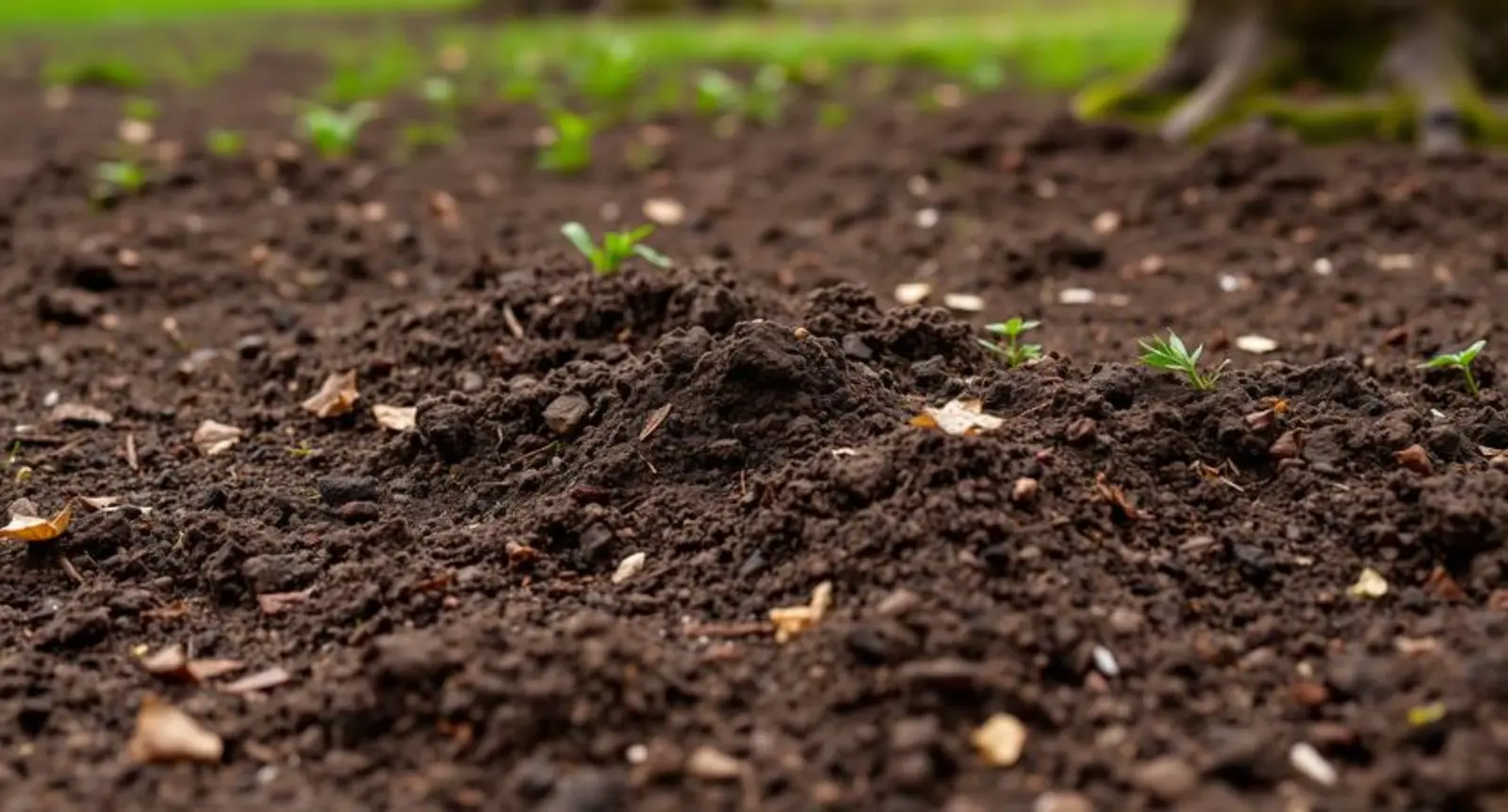
The best ground synonym depends on what ground means in your sentence. For physical land, use earth, soil, land, terrain, or surface. For a supporting basis, use foundation, basis, rationale, or footing.
In expressions such as “grounded in reality,” alternatives include rooted, based, anchored, or founded.
Common synonyms for ground
| Ground meaning | Best synonyms |
| Earth or land | earth, soil, land, terrain |
| Surface beneath your feet | surface, floor, earth |
| Area of land | tract, territory, acreage, land |
| Basis for an idea | basis, foundation, rationale |
| Reason or justification | reason, cause, basis, justification |
| Electrical connection | earth, earth connection |
| To physically land | land, touch down |
| To restrict or stop | restrain, confine, immobilize |
| To teach fundamentals | instruct, train, educate |
| Emotionally stable | center, anchor, stabilize |
The important point is that ground is a highly polysemous word: it has several related but distinct meanings. Choosing the right synonym therefore requires understanding the context rather than replacing the word mechanically.
What Does “Ground” Mean?
The noun ground commonly refers to the solid surface of the Earth on which people, animals, and objects stand. For example:
The children were playing on the ground.
However, ground has many other meanings.
It can describe soil, an area of land, a basis for an argument, a reason for a decision, an electrical connection, or even a conceptual foundation.
As a verb, ground can mean to put something on the ground, prevent someone from moving or operating, teach basic knowledge, or connect an electrical system to the Earth.
Because of these different meanings, the strongest synonym changes according to the sentence.
Ground Synonym Hierarchy
A useful way to choose a synonym is to organize alternatives by meaning rather than alphabetically.
1. Physical ground
earth → soil → land → terrain → surface → dirt
These words describe physical material or geographic space.
2. Ground as an area
land → territory → tract → acreage → property → grounds
These are useful when ground means a particular piece or area of land.
3. Ground as a basis
basis → foundation → footing → rationale → premise → justification
These work when ground refers to the reason or foundation behind an idea, argument, or decision.
4. Ground as stability
anchor → foundation → stability → security → rootedness
These alternatives are especially useful in figurative or emotional writing.
30+ Ground Synonyms and Related Words
1. Earth
Meaning: The soil or solid surface of the planet.
Tone: Neutral
Formality: Neutral to formal
Example:
The seeds were planted directly in the earth.
Best context: Nature writing, gardening, geography, environmental topics.
Ground vs. earth: Earth often emphasizes natural material or the planet, while ground focuses more on the surface beneath something.
2. Soil
Meaning: The upper layer of earth in which plants grow.
Tone: Neutral
Formality: Neutral
Example:
The farmer tested the soil before planting the crops.
Best context: Agriculture, gardening, biology, environmental science.
Important distinction: Soil is not a universal replacement for ground. A sentence about someone standing on the ground does not normally mean they are standing on soil.
3. Land
Meaning: A solid area of the Earth’s surface, especially when considered as property or geographic territory.
Example:
The family owns a large area of land.
Ground vs. land: Land usually emphasizes an area or property, whereas ground often emphasizes the surface itself.
4. Terrain
Meaning: A particular type or area of physical land.
Tone: Neutral to formal
Example:
The hikers struggled across the rocky terrain.
Best context: Geography, travel, military writing, outdoor activities.
5. Surface
Meaning: The outermost layer or top of something.
Example:
Water covered the surface of the ground.
Ground vs. surface: Surface is broader and can refer to water, roads, tables, walls, or other objects. Ground specifically evokes land or the Earth beneath you.
6. Dirt
Meaning: Loose earth or soil, especially in everyday speech.
Tone: Informal
Formality: Low to neutral
Example:
The children came inside with dirt on their shoes.
Ground vs. dirt: Dirt emphasizes loose soil or material. Ground can refer to the entire surface.
7. Grounds
Meaning: An area of land surrounding a building or used for a particular purpose.
Example:
Visitors can explore the museum grounds.
Best contexts: Schools, estates, museums, parks, institutions.
8. Territory
Meaning: A defined geographical area.
Example:
The animals defended their territory.
Ground vs. territory: Territory implies ownership, control, jurisdiction, or boundaries; ground does not necessarily do so.
9. Tract
Meaning: An identifiable area or stretch of land.
Example:
The developers purchased a large tract of land.
Formality: Formal
This is particularly useful in real estate, geography, and legal writing.
10. Acreage
Meaning: An area of land measured in acres.
Example:
The property includes considerable acreage.
This is more specific than ground because it emphasizes the size of a piece of land.
Ground Synonyms for “Basis” or “Reason”
One of the most important semantic shifts occurs when ground is abstract.
Consider:
The committee rejected the proposal on financial grounds.
Here, ground does not mean soil or land. It means reason or basis.
The best alternatives include:
Basis
The committee rejected the proposal on financial grounds.
→ The committee rejected the proposal on a financial basis.
However, depending on the sentence, because of financial concerns may sound more natural.
Reason
There were several grounds for the decision.
→ There were several reasons for the decision.
Reason is usually the simplest everyday replacement.
Justification
The lawyer had strong grounds for challenging the decision.
→ The lawyer had strong justification for challenging the decision.
Justification emphasizes evidence or reasoning that makes an action defensible.
Rationale
Rationale means the underlying reasoning behind a decision, policy, or action.
The report explains the rationale for the new policy.
This is especially appropriate in professional, academic, and business writing.
Foundation
Foundation emphasizes the underlying support upon which something is built.
Trust provides the foundation for a successful partnership.
Ground vs. Related Words: The Key Differences
| Word | Core meaning | Register | Best use |
| Ground | Surface, land, basis, or reason | Neutral | General use |
| Earth | Planet or natural soil | Neutral | Nature/science |
| Soil | Plant-growing earth | Neutral | Agriculture |
| Land | Area of Earth’s surface | Neutral | Property/geography |
| Terrain | Type of physical land | Neutral/formal | Geography/travel |
| Dirt | Loose soil | Informal | Everyday speech |
| Basis | Fundamental reason/support | Neutral/formal | Arguments |
| Foundation | Structural or conceptual support | Neutral | Ideas/systems |
| Rationale | Reasoning behind something | Formal | Business/academic |
| Premise | Proposition supporting an argument | Formal | Logic/academic writing |
| Footing | Basis or stable position | Formal/figurative | Finance/relationships |
Ground Synonyms by Context
Everyday Conversation
Use simple words such as:
- earth
- dirt
- land
- surface
- soil
Natural example:
Be careful—the ground is wet.
Depending on the intended meaning, you might say:
Be careful—the surface is wet.
But surface sounds more general and less specifically connected to outdoor land.
Professional Writing
For business or workplace communication, choose words according to meaning:
- basis
- foundation
- rationale
- footing
- grounds
Example:
The decision was made on legal grounds.
A more direct alternative is:
The decision was based on legal considerations.
The second version can be clearer for professional readers.
Academic Writing
Academic writing often benefits from precise abstract alternatives:
- basis
- foundation
- premise
- rationale
- underlying principle
Example:
The theory is grounded in empirical evidence.
Possible alternatives include:
The theory is based on empirical evidence.
or:
The theory is founded on empirical evidence.
Based on is generally the most natural choice.
Business Communication
For business contexts, ground often appears in expressions involving reasoning or negotiation.
Useful alternatives include:
- basis
- rationale
- foundation
- justification
- footing
Example:
We need common ground before negotiations can continue.
A related expression is:
We need a shared basis for further negotiations.
Emotional Expression
In emotional or psychological writing, grounded usually means stable, calm, realistic, or connected to reality.
Useful related words include:
- centered
- stable
- balanced
- anchored
- rooted
- secure
Example:
She remained grounded despite her success.
Possible alternatives:
She remained humble despite her success.
Notice that humble is not a direct synonym. It captures one possible implication of being grounded but changes the meaning.
Grounded Synonyms
The adjective grounded has its own synonym group.
When someone is emotionally stable:
- centered
- balanced
- composed
- stable
- calm
- secure
When an idea is supported by evidence:
- based
- founded
- rooted
- supported
- anchored
Examples:
His opinion is grounded in evidence.
→ His opinion is based on evidence.
She is very grounded.
→ She is very balanced and realistic.
The correct replacement depends heavily on whether grounded describes an idea or a person.
A Simple Ground Synonym Decision Tree
When replacing ground, ask these questions:
1. Does it mean the Earth’s physical surface?
→ Choose earth, land, soil, terrain, or surface.
2. Does it mean loose soil?
→ Choose soil or dirt.
3. Does it mean a specific area of land?
→ Choose land, grounds, territory, tract, or acreage.
4. Does it mean a reason?
→ Choose reason, basis, justification, or rationale.
5. Does it mean underlying support?
→ Choose foundation, basis, footing, or premise.
6. Does it mean emotionally stable when used as “grounded”?
→ Choose centered, balanced, stable, anchored, or rooted.
This approach is more accurate than using a fixed synonym list.
Common Collocations With Ground
Understanding collocations makes synonym selection much easier.
Physical expressions
- on the ground
- on solid ground
- ground level
- ground surface
- ground water
- ground floor
- ground cover
- ground temperature
Abstract expressions
- common ground
- grounds for
- on the grounds that
- ground for concern
- ground for dismissal
- solid ground
- lose ground
- gain ground
Verb expressions
- ground someone
- ground an aircraft
- ground a theory
- ground an argument in evidence
- ground a child
- ground a vehicle
These expressions should generally not be replaced word-for-word. The entire phrase may have a conventional meaning.
“Ground” vs. “Basis”
These two words are especially easy to confuse.
Ground often appears in expressions such as:
There are grounds for concern.
Basis is frequently used to describe the underlying support for a conclusion:
There is a strong basis for concern.
Both can work, but their collocations differ.
Choose “ground” when:
- using an established expression
- discussing legal reasons
- talking about grounds for action
- referring to a reason for a decision
Choose “basis” when:
- explaining the foundation of an argument
- describing how something operates
- writing formal or analytical prose
“Ground” vs. “Foundation”
Foundation is stronger when something is structurally or conceptually built upon another thing.
Education is the foundation of a strong society.
Using ground here would change the expression and sound unnatural.
However:
The argument is grounded in historical evidence.
Here, based on or rooted in may be better alternatives.
The distinction is simple:
Ground = underlying basis or physical surface
Foundation = supporting structure on which something is built
“Ground” vs. “Earth”
These words overlap when discussing the physical world, but they are not interchangeable in every sentence.
The astronaut returned to Earth.
You cannot normally replace Earth with ground.
Likewise:
The ball fell to the ground.
Here, earth is possible in some literary contexts, but it would sound less natural in everyday English.
Earth can mean the planet itself; ground normally refers to the surface beneath something.
Antonyms and Contrasting Concepts
The opposite of ground depends on its meaning.
For physical ground, contrasting concepts include:
- air
- sky
- water
- underground
- elevation
For a basis or foundation, conceptual contrasts may include:
- uncertainty
- instability
- weakness
- speculation
- unsupported claims
For grounded as emotionally stable, contrasting words include:
- unsettled
- unstable
- distracted
- detached
- unrealistic
There is therefore no single universal antonym for ground.
Common Mistakes When Using Ground Synonyms
Mistake 1: Treating every synonym as interchangeable
Incorrect approach: Replace ground with soil everywhere.
Soil is specifically earth suitable for plant growth. It cannot replace every meaning of ground.
Mistake 2: Ignoring collocations
“Common soil” is not the normal equivalent of common ground.
The established expression is:
We finally found common ground.
Mistake 3: Using overly formal vocabulary
In everyday writing, reason is often better than rationale.
Compare:
What was the rationale for leaving?
with:
What was the reason for leaving?
Both are correct, but the second is more conversational.
Mistake 4: Confusing figurative and literal meanings
The theory is grounded in evidence.
Here, the word is figurative. Replacing it with soil-based would completely destroy the intended meaning.
Expert Recommendation: How to Choose the Best Ground Synonym
The strongest synonym is not necessarily the most sophisticated word. It is the word that preserves the same meaning, register, emotional effect, and grammatical function.
Use this four-part test:
Meaning
Does the alternative express the same specific sense?
Context
Would a native speaker naturally use it in this situation?
Register
Is it appropriate for a conversation, academic paper, business document, or creative work?
Connotation
Does the replacement introduce an additional emotional or conceptual meaning?
For example, grounded, rooted, and anchored can all describe stability, but they create different images.
- Grounded → realistic and stable
- Rooted → deeply connected or established
- Anchored → securely held in place
That subtle distinction is what makes synonym selection effective.
Frequently Asked Questions About Ground Synonyms
What is the best synonym for ground?
There is no single best synonym. Earth, soil, land, terrain, surface, basis, foundation, reason, and rationale can all replace ground in particular contexts.
What is another word for ground in writing?
For physical ground, try earth, land, soil, terrain, or surface. For abstract ground meaning “reason,” use basis, reason, justification, or rationale.
What is a synonym for ground in an argument?
The strongest options are basis, reason, justification, premise, rationale, and foundation, depending on the exact sentence.
What is a synonym for grounded?
For a person, useful alternatives include centered, balanced, stable, realistic, calm, and secure. For an idea, use based, founded, rooted, supported, or anchored.
Is “soil” a synonym for “ground”?
Sometimes, but not always. Soil specifically refers to the earth in which plants grow, whereas ground has a much broader range of meanings.
Is “land” the same as “ground”?
They overlap, but they emphasize different concepts. Land generally refers to an area of Earth’s surface, while ground often refers to the physical surface beneath something.
What is a formal synonym for ground?
When ground means a reason, formal alternatives include rationale, justification, basis, premise, and foundation. When it means land, terrain or tract may work depending on context.
Final Takeaway
The word ground is unusually versatile because it can describe a physical surface, soil, an area of land, a reason, a basis, or conceptual support. That is why finding the right ground synonym requires more than consulting an alphabetical thesaurus.
For physical meanings, start with earth, soil, land, terrain, surface, or dirt. For abstract meanings, consider basis, foundation, reason, rationale, justification, or premise. When describing emotional stability through grounded, words such as centered, balanced, stable, anchored, and rooted may be more appropriate.
The best synonym is ultimately the one that preserves the original meaning while fitting the sentence’s context, register, tone, collocation, and intended audience. Precision matters more than simply choosing a word that looks similar in a thesaurus.

Ava motivational aur self-growth captions likhti hai. Uska content positivity, confidence aur success mindset ko promote karta hai.