
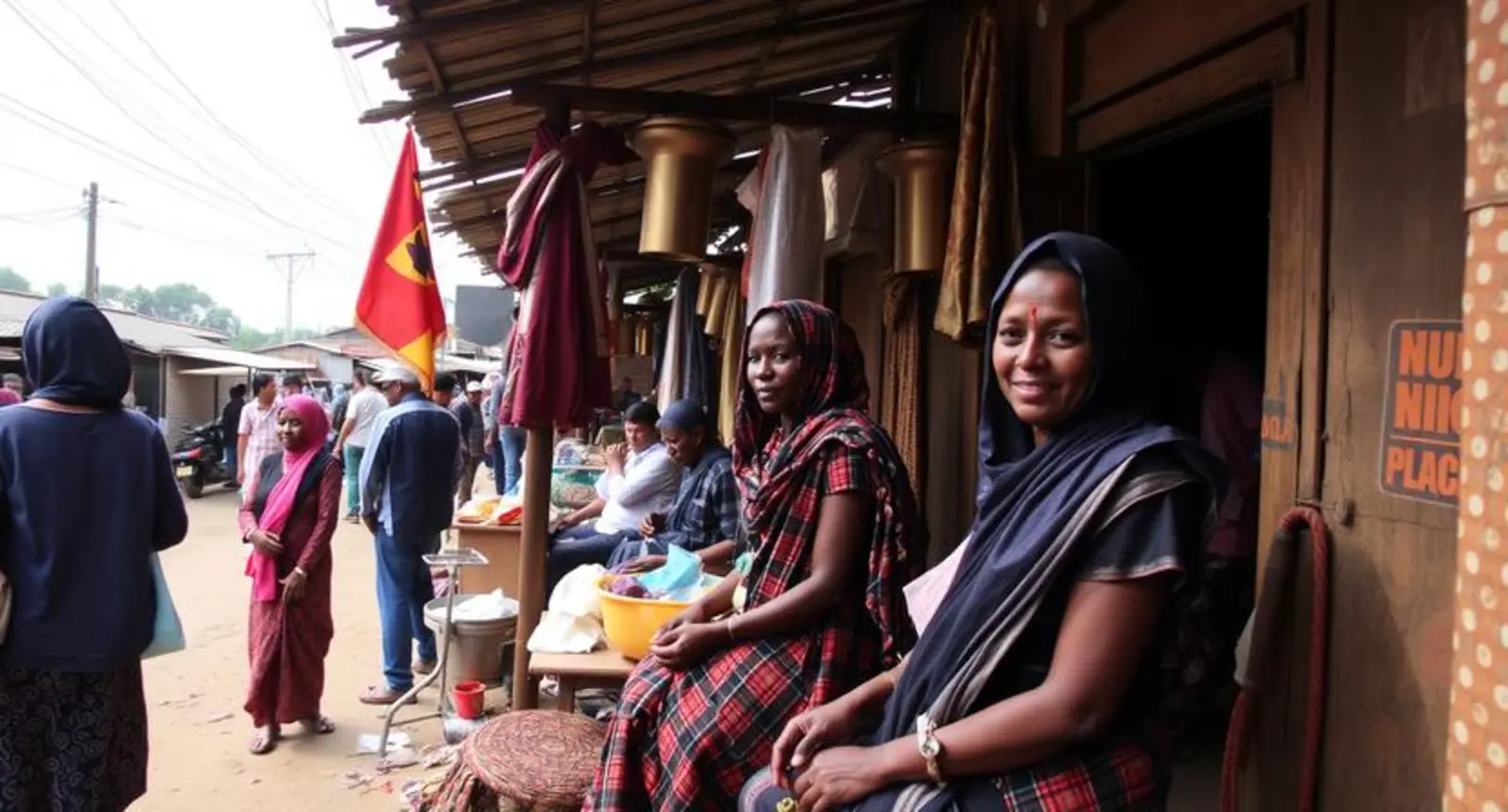
If you are looking for a diasporic synonym, the best alternative depends on what you mean by the word. Diasporic generally describes people, communities, identities, cultures, or experiences connected to a diaspora—a population living outside its ancestral or traditional homeland while maintaining some form of connection to it. Useful alternatives include diaspora-related, migrant, expatriate, transnational, dispersed, displaced, immigrant, overseas, and culturally connected, although these words are not interchangeable in every context.
Quick Answer: What Is a Synonym for Diasporic?
The closest general alternatives to diasporic are:
- Diaspora-related — directly connected with a diaspora
- Transnational — extending across national borders
- Dispersed — spread across different places
- Migrant — relating to people who move from one region or country to another
- Immigrant — relating to someone who has settled in another country
- Expatriate — relating to someone living outside their home country
- Overseas — situated or occurring abroad
- Displaced — forced or otherwise moved away from an original home
- Cross-cultural — involving more than one cultural setting
- Homeland-connected — maintaining a relationship with an ancestral homeland
The important distinction is that diasporic is broader than simply “immigrant” or “migrant.” It can describe cultural identity, literature, communities, traditions, memory, language, politics, and experiences that connect people living away from an ancestral homeland.
What Does Diasporic Mean?
Diasporic is an adjective derived from diaspora. It describes something associated with people or communities who live outside their ancestral homeland while retaining cultural, historical, familial, linguistic, or emotional connections to that homeland.
For example:
The novel explores the diasporic experience of families living between two cultures.
Here, diasporic does more than indicate that people moved countries. It suggests a continuing relationship with identity, heritage, memory, culture, or homeland.
Common expressions include:
- diasporic community
- diasporic identity
- diasporic literature
- diasporic culture
- diasporic experience
- diasporic population
- diasporic traditions
- diasporic history
- diasporic networks
- diasporic consciousness
Why Does Choosing the Right Synonym Matter?
Replacing diasporic with a random synonym can change the meaning.
For example:
- Diasporic literature emphasizes literature connected to diaspora and cultural displacement.
- Immigrant literature may focus more specifically on migration and settlement.
- Transnational literature emphasizes movement and connections across national borders.
- Expatriate literature can suggest people living abroad without necessarily emphasizing diaspora identity.
Therefore, the strongest synonym is determined by meaning + context + tone, not simply by dictionary similarity.
Diasporic Synonyms by Meaning
| Synonym | Core Meaning | Formality | Best Use |
| Diaspora-related | Connected to a diaspora | High | Academic/general |
| Transnational | Crossing national boundaries | High | Academic, professional |
| Dispersed | Spread across locations | Medium | General, academic |
| Migrant | Involving migration | Medium | Social, demographic |
| Immigrant | Relating to settlement in another country | Medium | Migration contexts |
| Expatriate | Living outside one’s home country | Medium–High | Professional/general |
| Displaced | Moved away from home, often unwillingly | High | Humanitarian contexts |
| Overseas | Located abroad | Medium | General/business |
| Cross-cultural | Connecting different cultures | Medium | Education, culture |
| International | Involving multiple countries | Medium | General/professional |
| Transcultural | Moving across or combining cultures | High | Academic/cultural |
| Multicultural | Involving multiple cultures | Medium | Society, education |
| Homeland-connected | Maintaining ties to an ancestral home | Medium | Explanatory writing |
Not every word in this table is a perfect synonym. Several are contextual alternatives that overlap with particular aspects of the meaning.
1. Diaspora-Related
Diaspora-related is often the safest replacement when you want to preserve the original meaning without introducing a different emphasis.
Meaning: Connected with a diaspora or diaspora communities.
Tone: Neutral and descriptive
Formality: Medium to high
Best contexts: Academic writing, journalism, cultural studies
Examples:
- The university offers courses on diaspora-related literature.
- The museum organized an exhibition about diaspora-related traditions.
Why choose it?
Use diaspora-related when precision matters and you do not want to imply that the people involved are necessarily migrants, immigrants, expatriates, or displaced persons.
Common collocations:
- diaspora-related research
- diaspora-related issues
- diaspora-related communities
- diaspora-related literature
2. Transnational
Transnational is one of the strongest alternatives when the focus is on relationships, identities, activities, or experiences that cross national borders.
Tone: Analytical
Formality: High
Best contexts: Academic writing, sociology, politics, business, cultural studies
Examples:
- The study examines transnational communities.
- Her work explores transnational identity and cultural memory.
Diasporic vs. Transnational
Diasporic emphasizes connection to a homeland or diaspora experience.
Transnational emphasizes relationships and activity across national boundaries.
A community can be transnational without necessarily being diasporic.
3. Dispersed
Dispersed means spread over a wide area or distributed among different locations.
Tone: Neutral
Formality: Medium
Best contexts: Academic, demographic, descriptive writing
Examples:
- The community became geographically dispersed over several generations.
- A dispersed population maintained strong cultural connections.
Important distinction
Dispersed describes geographical distribution, whereas diasporic can describe a much richer cultural and historical condition.
4. Migrant
Migrant refers to a person who moves from one place to another, often for work, economic reasons, safety, or other circumstances.
Tone: Neutral but context-sensitive
Formality: Medium
Best contexts: Migration studies, journalism, demographics
Example:
- The organization provides services for migrant communities.
Diasporic vs. Migrant
A migrant is defined primarily by movement.
A diasporic person or community may be defined by long-term cultural, historical, familial, or identity-based connections to an ancestral homeland.
A migrant community can therefore become diasporic, but the terms are not automatically equivalent.
5. Immigrant
Immigrant describes someone who moves to and settles in another country.
Tone: Neutral
Formality: Medium
Best contexts: Immigration, government, journalism, everyday communication
Example:
- The center provides language classes for immigrant families.
Diasporic vs. Immigrant
The distinction is especially important:
Immigrant focuses on settlement in a new country.
Diasporic focuses on the broader relationship between people, identity, culture, and an ancestral homeland.
Thus, immigrant is often too narrow to replace diasporic in cultural or literary discussions.
6. Expatriate
Expatriate, often shortened to expat, describes someone living outside their home country.
Tone: Neutral to formal
Formality: Medium–High
Best contexts: International employment, travel, professional writing
Example:
- The city has a growing expatriate population.
Diasporic vs. Expatriate
Expatriate generally describes living abroad.
Diasporic carries stronger associations with collective identity, heritage, memory, community, and homeland connections.
For that reason, expatriate is not always an accurate substitute.
7. Displaced
Displaced describes people who have been moved from their homes, particularly through conflict, persecution, disaster, or other disruptive circumstances.
Tone: Serious
Formality: High
Best contexts: Humanitarian writing, history, journalism, academic research
Example:
- The documentary follows displaced families rebuilding their lives abroad.
Caution
Do not automatically replace diasporic with displaced. Displacement implies movement away from home and may suggest involuntary movement, while diaspora can result from many historical circumstances.
8. Overseas
Overseas simply means abroad or in another country, especially when viewed from the speaker’s home country.
Examples:
- The organization supports overseas communities.
- The company serves customers in overseas markets.
It is useful in business and general communication but is usually less precise than diasporic in discussions of identity and culture.
9. Transcultural
Transcultural refers to interactions, identities, practices, or experiences that move across and combine cultural boundaries.
Examples:
- The poet’s work reflects a transcultural identity.
- The research examines transcultural forms of storytelling.
This can be an excellent choice when your subject involves cultural exchange and hybrid identity, rather than specifically a diaspora.
10. Multicultural
Multicultural means involving or containing multiple cultures.
Examples:
- The city has a highly multicultural population.
- The school promotes a multicultural curriculum.
Diasporic vs. Multicultural
A multicultural community contains people from multiple cultural backgrounds.
A diasporic community is connected to a population living away from an ancestral homeland.
These concepts can overlap but are not identical.
Diasporic Synonyms by Context
Everyday Conversation
For ordinary conversation, simpler alternatives are usually clearer:
- living abroad
- overseas
- immigrant
- migrant
- from a diaspora community
- from an international community
Instead of:
She has a diasporic background.
You might say:
Her family has roots in another country.
This version is often more natural for casual speech.
Academic Writing
Academic contexts favor more precise terms:
- diasporic
- transnational
- transcultural
- dispersed
- migrant
- displacement-related
- diaspora-related
Best choice: Keep diasporic when diaspora itself is the central concept. Substituting it merely to avoid repetition can reduce precision.
Business Communication
Depending on the subject, consider:
- international
- overseas
- expatriate
- global
- cross-border
- transnational
Example:
The company serves an international customer base.
This is generally more natural than using diasporic unless the business specifically serves diaspora communities.
Creative and Literary Writing
Possible alternatives include:
- displaced
- transnational
- culturally divided
- culturally connected
- homeland-connected
- cross-cultural
- expatriate
Creative writing gives you more freedom to select a word based on emotional effect.
For example:
Her poetry captured the diasporic longing for a distant homeland.
Could become:
Her poetry captured the longing of a displaced community for a distant homeland.
The second version changes the emotional emphasis toward displacement.
Diasporic Synonym Decision Matrix
Use this simple framework when choosing an alternative:
| If you want to emphasize… | Choose… |
| Diaspora itself | diaspora-related |
| Cross-border connections | transnational |
| Geographic spread | dispersed |
| Movement | migrant |
| Settlement abroad | immigrant |
| Living abroad | expatriate |
| Forced movement | displaced |
| Life abroad | overseas |
| Cultural interaction | cross-cultural |
| Multiple cultures | multicultural |
| Cultural boundary crossing | transcultural |
| Multiple countries generally | international |
A Simple Usage Decision Tree
Ask yourself:
1. Is diaspora identity the central idea?
→ Use diasporic or diaspora-related.
2. Is the focus on borders and cross-national relationships?
→ Use transnational.
3. Is the focus on migration?
→ Use migrant.
4. Is the focus on settlement in another country?
→ Use immigrant.
5. Is the focus on forced movement?
→ Use displaced.
6. Is the focus on cultural interaction?
→ Use cross-cultural or transcultural.
7. Is the point simply that someone lives abroad?
→ Use overseas or expatriate.
This prevents a common vocabulary mistake: treating every related word as a perfect synonym.
Diasporic vs. Related Words
Diasporic vs. Immigrant
Diasporic is broader and more identity-focused.
Immigrant specifically concerns a person who has moved to another country and settled there.
Diasporic identity can persist across generations, while immigrant describes a particular migration and settlement experience.
Diasporic vs. Migrant
Migrant emphasizes movement.
Diasporic emphasizes a continuing relationship between a dispersed population and its ancestral homeland.
Diasporic vs. Expatriate
Expatriate emphasizes residence outside one’s home country.
Diasporic can emphasize community, heritage, identity, memory, and homeland.
Diasporic vs. Transnational
These are close in academic contexts but not identical.
Transnational highlights activity or identity across national boundaries.
Diasporic highlights a dispersed population and its relationship with an ancestral homeland.
Diasporic vs. Displaced
Displaced often carries the implication of involuntary movement.
Diasporic does not necessarily imply forced migration.
Diasporic vs. Multicultural
Multicultural describes the coexistence of multiple cultures.
Diasporic describes a relationship between a dispersed population and its homeland or heritage.
Common Collocations With Diasporic
Learning collocations makes your vocabulary sound more natural.
Common noun combinations
- diasporic identity
- diasporic community
- diasporic experience
- diasporic culture
- diasporic literature
- diasporic history
- diasporic traditions
- diasporic consciousness
- diasporic networks
- diasporic narratives
- diasporic population
- diasporic memory
Example sentences
The novel explores diasporic identity across generations.
The festival celebrates diasporic culture.
Scholars have examined the author’s diasporic experience.
The film presents several diasporic narratives.
Grammar and Usage Tips
Diasporic is an adjective.
It normally modifies a noun:
- diasporic community
- diasporic identity
- diasporic literature
- diasporic experience
The noun is diaspora:
The diaspora has developed strong international networks.
The adjective is diasporic:
The writer explores diasporic identity.
Avoid treating diasporic and diaspora as interchangeable grammatical forms.
Pronunciation
Diasporic is commonly pronounced approximately as:
dye-uh-SPOR-ik
The related noun diaspora is commonly pronounced:
dye-ASS-puh-ruh
Pronunciation can vary somewhat by speaker and dialect.
Common Mistakes When Using Diasporic Synonyms
1. Assuming “immigrant” always means “diasporic”
It does not. Immigration describes movement and settlement; diaspora can encompass identity and collective cultural relationships across generations.
2. Using “displaced” when movement was voluntary
Displaced can imply involuntary removal. Choose it carefully.
3. Using “international” when cultural identity matters
International simply indicates involvement across countries. It does not necessarily communicate diaspora or homeland identity.
4. Using “multicultural” as a direct substitute
A multicultural group may contain many cultures without being a diaspora.
5. Changing the word simply to avoid repetition
In academic writing, repetition is sometimes preferable to an inaccurate synonym. If diasporic is the most precise word, keep it.
How to Improve Your Vocabulary With Diasporic-Related Words
A useful vocabulary ladder is:
Basic → More precise → Academic
- abroad → overseas → transnational
- moved → migrant → diasporic
- different cultures → multicultural → transcultural
- living elsewhere → expatriate → diaspora-related
- moved from home → displaced → displacement-related
This approach helps you choose vocabulary according to precision rather than complexity.
A sophisticated word is not automatically a better word. The strongest vocabulary choice is the one that communicates your intended meaning with the least ambiguity.
Best Diasporic Synonym for Different Situations
If you need one quick recommendation:
- For general writing: diaspora-related
- For academic writing: transnational or diasporic
- For migration: migrant
- For immigration: immigrant
- For someone living abroad: expatriate
- For forced movement: displaced
- For cultural interaction: transcultural
- For several cultures: multicultural
- For business: international or overseas
- For literary analysis: diasporic, transnational, or transcultural
Antonyms of Diasporic
There is no single perfect antonym for diasporic, because the word describes a complex social and cultural condition. Depending on context, possible contrasts include:
- homeland-based
- local
- domestic
- indigenous to the region
- settled
- geographically rooted
- home-country-based
However, these are contextual opposites, not exact dictionary antonyms.
For example:
The study compares diasporic communities with homeland-based communities.
This is more precise than simply calling homeland-based the antonym of diasporic.
Frequently Asked Questions
What is the closest synonym for diasporic?
Diaspora-related is often the closest straightforward alternative because it preserves the connection to diaspora without adding a substantially different meaning. Transnational is another strong option when the emphasis is on cross-border relationships.
Is “immigrant” a synonym for diasporic?
Not exactly. An immigrant is someone who moves to and settles in another country, while diasporic can describe broader cultural, historical, and identity connections maintained by people living outside an ancestral homeland.
Is “transnational” the same as “diasporic”?
No. The words overlap, particularly in academic writing, but transnational emphasizes relationships across national borders, whereas diasporic generally emphasizes a dispersed population’s relationship with an ancestral homeland and its associated identity.
What is the opposite of diasporic?
There is no universal antonym. Depending on context, words such as homeland-based, local, domestic, settled, or geographically rooted may provide an appropriate contrast.
Can “overseas” replace diasporic?
Sometimes, but only when the intended meaning is simply “located abroad.” Overseas does not necessarily communicate cultural identity, historical memory, or a relationship with an ancestral homeland.
What is the adjective form of diaspora?
The adjective is diasporic. For example: diasporic literature, diasporic identity, and diasporic community.
Final Recommendation
The most important lesson about diasporic synonyms is that there is no single replacement that works in every sentence. Diaspora-related is usually the safest close alternative, while transnational, migrant, immigrant, expatriate, displaced, overseas, transcultural, and multicultural each capture a different part of the concept.
For precise writing, first identify what you are actually trying to emphasize: migration, settlement, geography, cultural identity, cross-border relationships, displacement, or connection to a homeland. Then choose the word that expresses that specific meaning.
If your sentence is about identity, heritage, literature, memory, or a community’s continuing relationship with its ancestral homeland, diasporic is often the strongest choice. If your emphasis is simply on living abroad, expatriate or overseas may sound more natural. For academic discussions of cross-border networks and identities, transnational can be especially effective.
In other words, good synonym selection is not about finding the fanciest alternative. It is about finding the most accurate word for the audience, context, tone, and intended meaning.

Ethan ek creative content writer hai jo modern lifestyle aur relatable captions likhta hai. Uska style clean, minimal aur Instagram-friendly hota hai.