
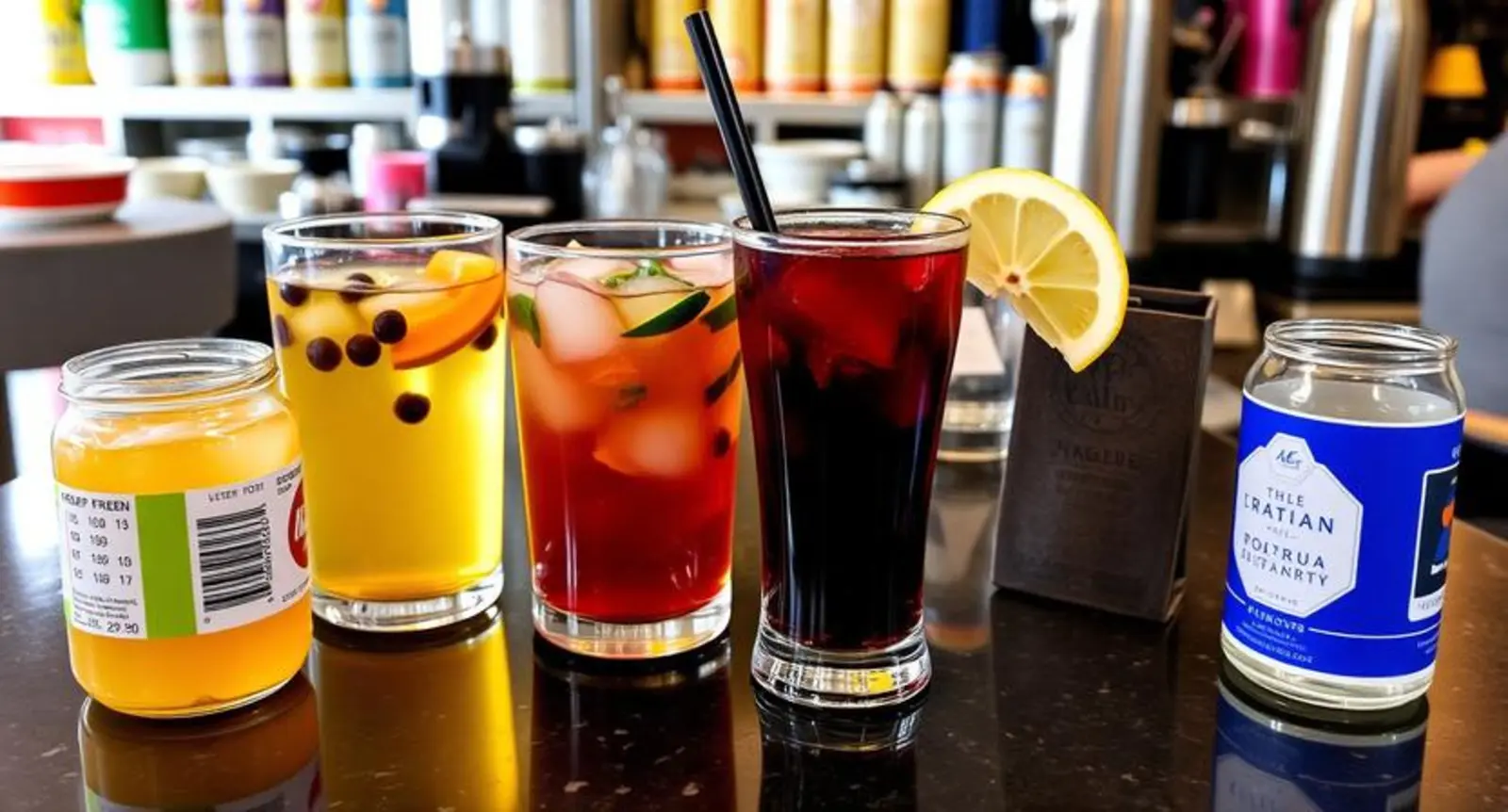
If you are looking for a beverage synonym, the best replacement depends on what you mean by “beverage.” Words such as drink, refreshment, potable, libation, brew, beverage, tonic, elixir, infusion, and thirst-quencher can overlap in meaning, but they are not interchangeable in every sentence. Some sound natural in everyday conversation, while others are better suited to menus, marketing, literature, hospitality, or formal writing.
This complete guide explains the most useful synonyms for beverage, their meanings, tone, formality, collocations, grammar, and real-world contexts. It also gives you a practical framework for choosing the right word instead of simply replacing one word with another.
Quick Answer: What Is a Synonym for Beverage?
The most common synonym for beverage is drink.
Other alternatives include:
- Refreshment
- Drinking water
- Potable
- Libation
- Brew
- Infusion
- Tonic
- Elixir
- Draft
- Concoction
- Juice
- Tea
- Coffee
- Soft drink
- Refreshing drink
Best everyday choice: drink
Best hospitality choice: refreshment
Best formal choice: beverage or potable
Best literary choice: libation
Best for beer or crafted drinks: brew
Best for herbal or steeped drinks: infusion
Best marketing choice: refreshment, elixir, or crafted drink, depending on the product
What Does Beverage Mean?
A beverage is a liquid intended for drinking, especially a drink prepared for consumption.
The word is commonly used as a broad category covering water, tea, coffee, juice, milk, soft drinks, smoothies, and many other drinkable liquids.
Beverage in a Sentence
- “The restaurant offers a wide selection of beverages.”
- “Water is the most essential beverage for daily hydration.”
- “Guests were offered a complimentary beverage.”
- “The company specializes in plant-based beverages.”
The noun beverage is generally more formal and commercial than drink.
For example:
“Would you like a drink?”
sounds natural in conversation.
“Would you like a beverage?”
is grammatically correct but can sound more formal, institutional, or service-oriented.
Beverage Synonym Hierarchy
Not every synonym has exactly the same meaning. A useful way to understand beverage-related vocabulary is to organize it into levels.
| Word | Core Meaning | Formality | Best Context |
| Drink | Something consumed by drinking | Low | Everyday speech |
| Beverage | Drinkable liquid | Medium | General/formal writing |
| Refreshment | Drink or light food served to refresh | Medium | Hospitality/events |
| Potable | Fit or safe to drink | High | Technical/formal |
| Libation | Drink, traditionally alcoholic or ceremonial | High | Literary/formal |
| Brew | Drink made by brewing | Low–Medium | Coffee, tea, beer |
| Infusion | Liquid made by steeping ingredients | Medium–High | Tea/herbs |
| Tonic | Drink associated with refreshment or health | Medium | Wellness/marketing |
| Elixir | Special or medicinal drink | High/Literary | Creative/marketing |
| Concoction | Mixture of ingredients, often a drink | Medium | Informal/creative |
This hierarchy reveals an important principle: a good synonym preserves both meaning and context.
1. Drink
Drink is the most natural and versatile synonym for beverage.
Meaning
A liquid that people consume by drinking.
Tone
Neutral and conversational.
Formality
Informal to neutral.
Best contexts
- Everyday conversation
- Restaurants
- Social situations
- General writing
- Customer communication
Common collocations
- cold drink
- hot drink
- alcoholic drink
- healthy drink
- refreshing drink
- energy drink
- soft drink
- favorite drink
Examples
- “Can I get you a drink?”
- “Water is my favorite drink.”
- “The café serves hot and cold drinks.”
Grammar tip
Drink can function as both a noun and a verb.
Noun:
“I ordered a drink.”
Verb:
“I like to drink tea.”
This flexibility makes drink more useful in ordinary English than beverage.
2. Refreshment
Refreshment is a useful beverage synonym when the emphasis is on something that refreshes or provides relief from thirst.
Meaning
A drink, or sometimes a small amount of food and drink, served to refresh someone.
Tone
Pleasant, welcoming, and service-oriented.
Formality
Neutral to moderately formal.
Best contexts
- Events
- Meetings
- Hotels
- Conferences
- Hospitality
- Invitations
- Catering
Common collocations
- light refreshments
- complimentary refreshments
- cold refreshments
- refreshments will be served
- refreshments available
Examples
- “Light refreshments will be served after the presentation.”
- “Guests were offered complimentary refreshments.”
- “The hotel provides refreshments throughout the afternoon.”
Important distinction
Refreshment is not always a direct replacement for beverage because it can refer to food as well as drinks.
3. Potable
Potable is a more specialized word.
Meaning
Safe or suitable for drinking.
Tone
Technical and factual.
Formality
Formal.
Best contexts
- Water quality
- Public health
- Engineering
- Environmental writing
- Scientific communication
- Government documents
Common collocations
- potable water
- potable supply
- potable drinking water
- potable water system
Example
“The facility provides potable water to residents.”
Beverage vs. potable
These words are not exact synonyms.
Beverage describes something intended to be consumed as a drink.
Potable describes whether something is safe or suitable to drink.
Therefore, saying “potable” instead of “beverage” can change the meaning considerably.
4. Libation
Libation is an elegant and literary alternative to beverage or drink.
Meaning
A drink, especially an alcoholic drink, and historically a drink offered during a ceremony or ritual.
Tone
Literary, sophisticated, humorous, or ceremonial.
Formality
High.
Best contexts
- Literature
- Historical writing
- Ceremonial language
- Creative writing
- Sophisticated restaurant copy
Example
“The guests raised their libations in celebration.”
Usage note
Do not use libation as the default replacement for beverage. In everyday speech, it may sound deliberately sophisticated or playful.
5. Brew
Brew refers to a drink produced through brewing.
It is especially associated with beer, coffee, and tea.
Tone
Casual and approachable.
Formality
Informal to neutral.
Common collocations
- fresh brew
- morning brew
- craft brew
- local brew
- strong brew
- freshly brewed coffee
Examples
- “I need a fresh brew before work.”
- “The café serves several specialty brews.”
- “This local brewery produces several craft brews.”
Beverage vs. brew
Beverage is a broad category.
Brew identifies a particular preparation method or product type.
Therefore, every brew can be a beverage, but not every beverage is a brew.
6. Infusion
Infusion describes a liquid produced by steeping ingredients in water or another liquid.
It is particularly common with tea, herbs, botanicals, and specialty drinks.
Tone
Refined, natural, culinary, or technical.
Formality
Moderate to high.
Common collocations
- herbal infusion
- botanical infusion
- tea infusion
- fruit infusion
- natural infusion
Example
“The menu features a calming herbal infusion.”
Best use
Use infusion when preparation matters. It is more precise than simply saying “beverage.”
7. Tonic
A tonic can refer to a drink associated with refreshment, vitality, or historically medicinal purposes.
Tone
Refreshing, energetic, wellness-oriented.
Formality
Neutral.
Common collocations
- herbal tonic
- wellness tonic
- botanical tonic
- fruit tonic
- tonic water
Example
“The café introduced a new botanical tonic.”
Important distinction
Tonic is narrower than beverage and often carries health, botanical, or specialized-product associations.
8. Elixir
Elixir is an evocative synonym that suggests a special, powerful, or almost magical drink.
Tone
Creative, luxurious, mysterious, or literary.
Formality
High/stylized.
Best contexts
- Marketing
- Luxury products
- Creative writing
- Fantasy
- Beauty and wellness branding
Example
“The chef created a citrus elixir with fresh herbs.”
Writing tip
Use elixir for effect, not routine description. Calling ordinary tap water an “elixir” can sound exaggerated unless the context is intentionally creative.
9. Concoction
A concoction is a mixture made from several ingredients.
It can refer to a drink, but it can also describe mixtures more generally.
Tone
Informal, playful, sometimes skeptical.
Example
“She created a colorful fruit concoction.”
Connotation
Unlike beverage, concoction draws attention to the unusual or mixed nature of something.
It can be positive:
“The bartender prepared a delicious tropical concoction.”
Or slightly negative:
“He poured an odd-looking concoction into the glass.”
10. Potation
Potation is a rare and formal word relating to the act or practice of drinking.
It is primarily useful in historical, literary, or specialized writing.
Example
“The text describes elaborate traditions of potation.”
Because it is uncommon, it is usually not a good substitute for beverage in modern everyday English.
Beverage Synonyms by Context
Choosing a synonym becomes easier when you identify the communication setting first.
| Context | Best Word Choices |
| Everyday conversation | drink |
| Restaurant menu | drink, beverage |
| Hotel service | beverage, refreshment |
| Conference | refreshments |
| Academic writing | beverage, drink |
| Scientific writing | beverage, potable liquid |
| Water infrastructure | potable |
| Coffee culture | brew |
| Tea culture | infusion, brew |
| Wellness branding | tonic, elixir |
| Luxury marketing | elixir, crafted beverage |
| Literature | libation, elixir |
| Creative writing | concoction, elixir |
| Hospitality | refreshment, beverage |
| Casual advertising | refreshing drink |
| Technical communication | potable liquid, beverage |
Beverage vs. Drink
These two words are the closest common alternatives, but their registers differ.
| Feature | Beverage | Drink |
| Meaning | Drinkable liquid | Drinkable liquid |
| Register | More formal | More conversational |
| Everyday use | Moderate | Very common |
| Business use | Very common | Common |
| Restaurant use | Common | Very common |
| Marketing | Common | Common |
| Flexibility | Moderate | Very high |
Which should you choose?
Use drink when speaking naturally.
Use beverage when you want a more professional, commercial, descriptive, or category-based tone.
Natural:
“Would you like something to drink?”
Professional:
“Our beverage selection includes coffee, tea, juices, and sparkling water.”
Beverage vs. Refreshment
These words overlap but are not identical.
Beverage focuses on the drink itself.
Refreshment focuses on its purpose or the hospitality surrounding it.
Compare:
“The store sells a variety of beverages.”
with:
“Refreshments will be available after the meeting.”
The first describes products. The second describes something offered to guests.
Beverage vs. Libation
Beverage is neutral and broad.
Libation is literary, ceremonial, or often associated with alcohol.
Use beverage when:
- You need precision.
- You are writing product information.
- You are describing drinks generally.
Use libation when:
- You want literary flair.
- The drink has ceremonial significance.
- You are writing creatively.
Beverage vs. Brew
Brew is more specific.
A brew is generally produced by brewing, whereas beverage covers a much larger category.
Examples:
- Coffee → beverage and brew
- Tea → beverage and brew
- Beer → beverage and brew
- Orange juice → beverage, but normally not a brew
- Water → beverage, but not a brew
Beverage Synonym Decision Matrix
When choosing a synonym, ask four questions:
| Question | If Yes | Recommended Word |
| Is this everyday speech? | Keep it simple | Drink |
| Is hospitality involved? | Emphasize service | Refreshment |
| Is safety/quality involved? | Technical meaning | Potable |
| Is brewing important? | Focus on preparation | Brew |
| Is steeping important? | Focus on preparation | Infusion |
| Is the language literary? | Add sophistication | Libation |
| Is the product wellness-focused? | Suggest vitality | Tonic |
| Is the language imaginative? | Add stylistic flavor | Elixir |
| Is it an unusual mixture? | Highlight ingredients | Concoction |
This is more useful than memorizing a long synonym list because it connects word choice to communicative purpose.
Beverage Synonyms for Professional Writing
Professional writing usually benefits from precision rather than unnecessary vocabulary variety.
Good choices include:
- beverage
- refreshment
- drink
- potable liquid
- drinking water
- beverage product
- prepared drink
Example
Weak:
“Our company has many different drinks.”
More professional:
“Our company offers a diverse portfolio of beverage products.”
However, avoid replacing every instance of drink with beverage. Repetition of formal vocabulary can make writing sound artificial.
Beverage Synonyms for Marketing
Marketing language often emphasizes sensory experience, quality, freshness, or lifestyle.
Useful terms include:
- refreshing drink
- crafted beverage
- signature beverage
- botanical infusion
- natural tonic
- premium beverage
- specialty brew
- fruit-based refreshment
- handcrafted drink
- flavorful concoction
Example
Basic:
“Try our new fruit drink.”
Marketing-oriented:
“Discover our refreshing fruit beverage crafted with vibrant natural flavors.”
The second version works because it adds meaningful product information rather than simply replacing “drink” with a fancier word.
Beverage Synonyms for Academic Writing
Academic writing generally favors beverage, drink, and more precise technical terms over decorative alternatives.
Good examples
- sugar-sweetened beverages
- caffeinated beverages
- alcoholic beverages
- non-alcoholic beverages
- beverage consumption
- beverage intake
- drinking water
Example
“Frequent consumption of sugar-sweetened beverages has become an important topic in nutrition research.”
In academic contexts, words such as elixir and libation usually sound inappropriate unless they appear in historical or literary analysis.
Beverage Synonyms for Creative Writing
Creative writing allows more stylistic freedom.
Useful choices include:
- libation
- elixir
- brew
- concoction
- infusion
- tonic
- draught
- nectar
Example
Plain:
“He drank the mysterious beverage.”
Creative:
“He lifted the dark elixir to his lips.”
The second sentence creates atmosphere rather than simply conveying information.
Beverage-Related Vocabulary
A strong vocabulary does not depend only on synonyms. Related words help you describe a beverage accurately.
Types of beverages
- water
- tea
- coffee
- juice
- smoothie
- soda
- milk
- lemonade
- hot chocolate
- sparkling water
- energy drink
- sports drink
- herbal tea
- soft drink
- specialty coffee
Descriptive vocabulary
- refreshing
- chilled
- sparkling
- carbonated
- creamy
- sweet
- bitter
- fruity
- herbal
- aromatic
- flavorful
- fizzy
- hot
- cold
- smooth
- rich
- tangy
Beverage Collocations
Collocations are word combinations that naturally occur together.
Common beverage collocations include:
- beverage industry
- beverage company
- beverage market
- beverage category
- beverage menu
- beverage selection
- beverage service
- beverage consumption
- beverage container
- beverage product
- alcoholic beverage
- non-alcoholic beverage
- carbonated beverage
- healthy beverage
- refreshing beverage
- hot beverage
- cold beverage
- specialty beverage
Learning these combinations can make your writing sound more natural than simply memorizing isolated synonyms.
Common Mistakes With Beverage Synonyms
1. Using “potable” to mean “beverage”
Incorrect in most contexts:
“The restaurant has many potables.”
Potable describes suitability for drinking, not simply the category of beverage.
2. Using “libation” everywhere
“Libation” is not a normal replacement for “drink” in every conversation.
“Can I have a libation?”
may sound humorous or deliberately formal.
3. Treating “refreshment” as an exact synonym
Refreshment can include food, so context matters.
4. Overusing fancy vocabulary
Good writing is not about choosing the most sophisticated word. It is about choosing the most accurate and natural word.
5. Ignoring audience
A restaurant menu, scientific paper, children’s story, and advertising campaign require different vocabulary.
How to Choose the Best Beverage Synonym
Use this simple decision process:
Need an ordinary word?
→ Choose drink.
Need a broad professional category?
→ Choose beverage.
Talking about hospitality or events?
→ Choose refreshment.
Discussing drinking safety?
→ Choose potable.
Talking about coffee, tea, or beer made by brewing?
→ Choose brew.
Talking about steeped herbs or tea?
→ Choose infusion.
Writing creatively or ceremonially?
→ Choose libation.
Describing a wellness-style product?
→ Consider tonic.
Creating an imaginative or luxurious image?
→ Consider elixir.
Emphasizing a mixture of ingredients?
→ Consider concoction.
Vocabulary Ladder: From Simple to Sophisticated
One useful way to improve vocabulary is to build a ladder rather than memorize disconnected words.
Basic:
drink
↓
Neutral/Formal:
beverage
↓
Hospitality:
refreshment
↓
Specialized:
brew / infusion / tonic
↓
Technical:
potable
↓
Literary:
libation / elixir
The important lesson is that “higher” does not mean “better.” A sophisticated word is useful only when its meaning and tone fit the situation.
Antonyms of Beverage
There is no perfect direct antonym for beverage because it is a category noun rather than a quality or action.
Depending on context, contrasting concepts might include:
- solid food
- food
- non-liquid
- inedible substance
- non-potable substance
However, these are conceptual contrasts, not strict dictionary antonyms.
For example, food can contrast with beverage on a restaurant menu:
“The menu is divided into food and beverages.”
Beverage Expressions and Phrases
Common beverage-related expressions include:
- have a drink
- grab a drink
- enjoy a refreshing drink
- serve refreshments
- order a beverage
- pour a drink
- make a brew
- brew a cup of tea
- raise a glass
- offer refreshments
- beverage of choice
- signature beverage
- specialty drink
Example
“Guests can enjoy a refreshing beverage while waiting for their table.”
Pronunciation Note
Beverage is commonly pronounced approximately as:
BEV-er-ij
The stress is generally placed on the first syllable.
Because pronunciation can vary slightly between English varieties, learners should focus on clear syllable stress rather than trying to imitate one exact accent.
Expert Writing Advice
When editing a sentence containing beverage, do not automatically search for a synonym.
First ask:
- What exactly does the word mean here?
- Who is reading this?
- Is the writing formal or conversational?
- Does the replacement preserve the original meaning?
- Does the replacement sound natural with surrounding words?
- Does it introduce an unwanted association?
- Is variety actually needed?
For SEO writing, semantic richness should come from useful coverage, not artificial synonym stuffing.
For example, repeatedly writing:
beverage, drink, refreshment, libation, potable, brew…
does not automatically improve topical quality.
A better article naturally discusses types of beverages, preparation methods, contexts, consumption, descriptions, collocations, and terminology.
Part 2: Advanced Beverage Synonym Guide
Semantic Relationships Around Beverage
The vocabulary surrounding beverage can be divided into several lexical fields.
Category field
- drink
- beverage
- refreshment
- liquid
- potable
Preparation field
- brew
- infusion
- mixture
- blend
- concoction
Experience field
- refreshing
- flavorful
- aromatic
- soothing
- invigorating
Product field
- soft drink
- juice
- coffee
- tea
- smoothie
- tonic
Literary field
- libation
- elixir
- nectar
- draught
Understanding these relationships helps writers choose words based on meaning instead of relying on a thesaurus.
Beverage vs. Nectar
Nectar is sometimes used poetically for a delicious or desirable drink.
In mythology, nectar is associated with the drink of the gods. In modern English, it can also describe fruit juice or a particularly appealing liquid.
Example
“The ripe mango produced a sweet nectar.”
It is more expressive than beverage and should generally be reserved for descriptive or creative contexts.
Beverage vs. Draught
Draught is an older or literary term for a quantity of liquid drunk at one time.
It can also have specialized meanings, especially in relation to beer served from a tap.
Example
“He took a long draught of water.”
In modern everyday English, drink is usually more natural.
Beverage vs. Refreshment: Practical Choice
Imagine a conference.
You would naturally write:
“Refreshments will be served at 3 p.m.”
If you are describing the products being served:
“The beverage menu includes coffee, tea, and sparkling water.”
The difference is subtle but important:
refreshment = service/experience
beverage = product/category
Beverage Synonyms in Customer Service
Customer-service language should sound helpful rather than unnecessarily formal.
Natural
“Would you like a drink?”
Polished
“Would you like something to drink?”
Hospitality-oriented
“May I offer you a refreshment?”
Formal
“Which beverage would you prefer?”
The best choice depends on brand voice and audience.
Beverage Synonyms in Public Speaking
Speakers often benefit from simple, familiar vocabulary.
Instead of:
“We provide a diverse selection of potable refreshments.”
say:
“We offer a wide range of beverages for our customers.”
If the audience is general, beverage is clear and professional without sounding overly technical.
Beverage Synonyms in Education
Teachers and educational writers should favor clarity.
Example
“Students can compare different types of beverages and identify which ingredients they contain.”
For younger learners, drink is often more accessible than beverage.
For advanced educational materials, both can be introduced:
“A beverage is any drinkable liquid prepared for consumption.”
This teaches vocabulary while preserving clarity.
Beverage Synonym Comparison Table
| Synonym | Meaning | Tone | Precision | Naturalness |
| Drink | General drink | Casual | High | Very high |
| Beverage | Drinkable product/category | Professional | High | Very high |
| Refreshment | Drink served to refresh | Welcoming | Medium | High |
| Potable | Safe to drink | Technical | High | Medium |
| Libation | Drink, often alcoholic/ceremonial | Literary | Medium | Low in casual speech |
| Brew | Brewed drink | Casual | High for relevant drinks | High |
| Infusion | Liquid made by steeping | Refined | High | High in specialty contexts |
| Tonic | Specialized refreshing/wellness drink | Modern | Medium | High in relevant contexts |
| Elixir | Special or magical-style drink | Creative | Low–Medium | High in creative contexts |
| Concoction | Mixed preparation | Playful | Medium | High in informal contexts |
Frequently Asked Questions
What is the best synonym for beverage?
Drink is the best general synonym for beverage because it is simple, natural, and widely understood. In professional or commercial writing, beverage itself may be preferable.
What is a fancy word for beverage?
Depending on context, libation, elixir, infusion, or nectar can provide a more sophisticated or literary effect. These words have different connotations, so they should not be treated as exact equivalents.
What is a formal synonym for beverage?
Beverage is already a relatively formal alternative to drink. Potable can be appropriate in technical contexts when the intended meaning is “safe to drink.”
What is a synonym for beverage in hospitality?
Refreshment is often appropriate when talking about drinks provided to guests, especially at meetings, conferences, hotels, and events.
What is another word for a refreshing beverage?
Depending on the context, you can use refreshment, refreshing drink, cooling drink, tonic, or thirst-quencher.
Is “drink” and “beverage” the same thing?
They overlap strongly, but drink is more conversational while beverage is more formal and category-oriented. “Drink” also has broader grammatical uses because it can function as both a noun and a verb.
What is a synonym for alcoholic beverage?
Depending on context, alternatives include alcoholic drink, libation, cocktail, spirits, brew, or tipple. These are not interchangeable because each describes a different category or style.
What is a synonym for non-alcoholic beverage?
Common alternatives include non-alcoholic drink, soft drink, refreshment, or zero-proof beverage, depending on the exact product.
What is the opposite of beverage?
There is no exact dictionary antonym for beverage. In practical contexts, food or solid food can function as a contrasting category.
How can I avoid repeating “beverage” in an article?
Do not replace every occurrence with an unusual synonym. Instead, use context-specific terms such as drink, refreshment, brew, infusion, soft drink, juice, tea, coffee, or beverage product when they accurately describe the subject.
Final Takeaway
The strongest beverage synonym depends on meaning, audience, tone, and context.
For everyday English, choose drink. For professional and commercial writing, beverage is often the clearest option. Use refreshment when hospitality or revitalization is important, potable for technical discussions about drinkability, brew for brewed products, and infusion for liquids created through steeping. Words such as libation, elixir, nectar, and draught can add literary or stylistic character but should be used selectively.
The central lesson is simple: a synonym is not automatically a substitute. Good vocabulary selection preserves meaning while matching register, audience, emotional tone, and purpose.
If you are writing for SEO, academic readers, customers, or everyday audiences, semantic variety works best when it improves clarity. The goal is not to use the most complicated word available. The goal is to use the most precise, natural, and useful word for the situation.
That approach creates stronger writing, richer vocabulary, and genuinely helpful lexical content.

Ava motivational aur self-growth captions likhti hai. Uska content positivity, confidence aur success mindset ko promote karta hai.